Monroeville, PA
Garage Door Roller Replacement Around Monroeville
Worn or cracked rollers on a Monroeville garage door, explained by the area's 1950s housing stock and cold winters, plus how booking and DIY limits actually work.
Popular Services
What Causes It Around Here
Rollers fail faster here for two reasons that stack on top of each other. First, the housing stock. Most of the service area's homes were built between 1938 and 1985, concentrated across 89 named communities, and a large share of that stock is pre-1960. Original tracks on houses this old were set with looser tolerances than what's standard now, so rollers ride slightly off-center for decades before anyone notices the wear pattern.
Second, the climate. This region sits in a severe cold band, which means real freeze-thaw cycling every winter. Cold tightens the steel track and stiffens roller lubricant right when the door gets used the most - garage doors get more daily cycles in winter because cars go in and out more. A roller that's fine in July can start binding in January simply because the grease inside the bearing thickened up and the track contracted slightly around it.
Put those two together - an older track geometry plus a hard winter cycle - and you get the classic Monroeville-area pattern: smooth all summer, noisy and sticky by February. Nylon rollers tend to crack at the stem in cold weather faster than they wear out from cycles alone, which is the opposite of what a lot of homeowners expect.
Getting It Booked In
Roller replacement is usually a same-visit job once we're looking at the track in person - we bring stock sizes of both nylon and steel rollers on the truck because we can't predict which track gauge a given house has until we're there.
Track damage hidden underneath
What we can't always predict ahead of time is whether the track itself needs straightening or replacing alongside the rollers; a door that's been running on a bad roller for months sometimes has track damage that only shows up once the old roller comes out.
Share noise and jump details
When you call, it helps to tell us which side is making noise, whether the door has jumped the track, and roughly how old the door is - a door from the 1950s-era housing stock common around here often still has the original track, which changes the job.
Ten mile service radius
We serve homeowners across the wider area out to roughly ten miles, including towns like Trafford, Wilmerding, Turtle Creek, Churchill, and East Pittsburgh, each a few miles out, and we scope every roller job the same way regardless of which town it's in. If your door is also sagging, off its cables, or the spring looks stretched, mention that too - rollers rarely fail completely alone once a door's hardware is this old, and bundling the look saves you a second truck visit.
Doing It Yourself
You can replace rollers yourself on a door that's still under spring tension if you know how to release and reset it safely, but we'll be honest about where this goes wrong.
Bottom rollers are simpler
The bottom rollers are the easy ones - pull the roller stem out of the bracket once the door is down and the opener is disconnected. The top rollers, on a door with the spring still loaded, are a different story, and that's where most DIY jobs around here end up with a trip to urgent care instead of a finished repair. A cheap nylon roller swap is a fine weekend job if your track is straight and the rest of the hardware is sound.
Track damage rules out DIY
It's not worth doing if the track is bent, if a roller has already chewed a groove into the rail, or if the door is original to a house built in the 1950s and nothing on it has been serviced since - at that point you're better off having someone look at the whole assembly once rather than replacing one part and finding the next failure in a month.
Phone diagnosis unreliable
We don't do remote diagnosis over the phone for this one. Roller wear looks and sounds different depending on which part is actually failing, and guessing wrong means buying parts twice.
What You Are Seeing
If your door is grinding, hopping in the track, or making a steady clunk-clunk-clunk as it moves, the rollers are usually the part to blame before you start pricing a new opener.
Flat and wobbly rollers
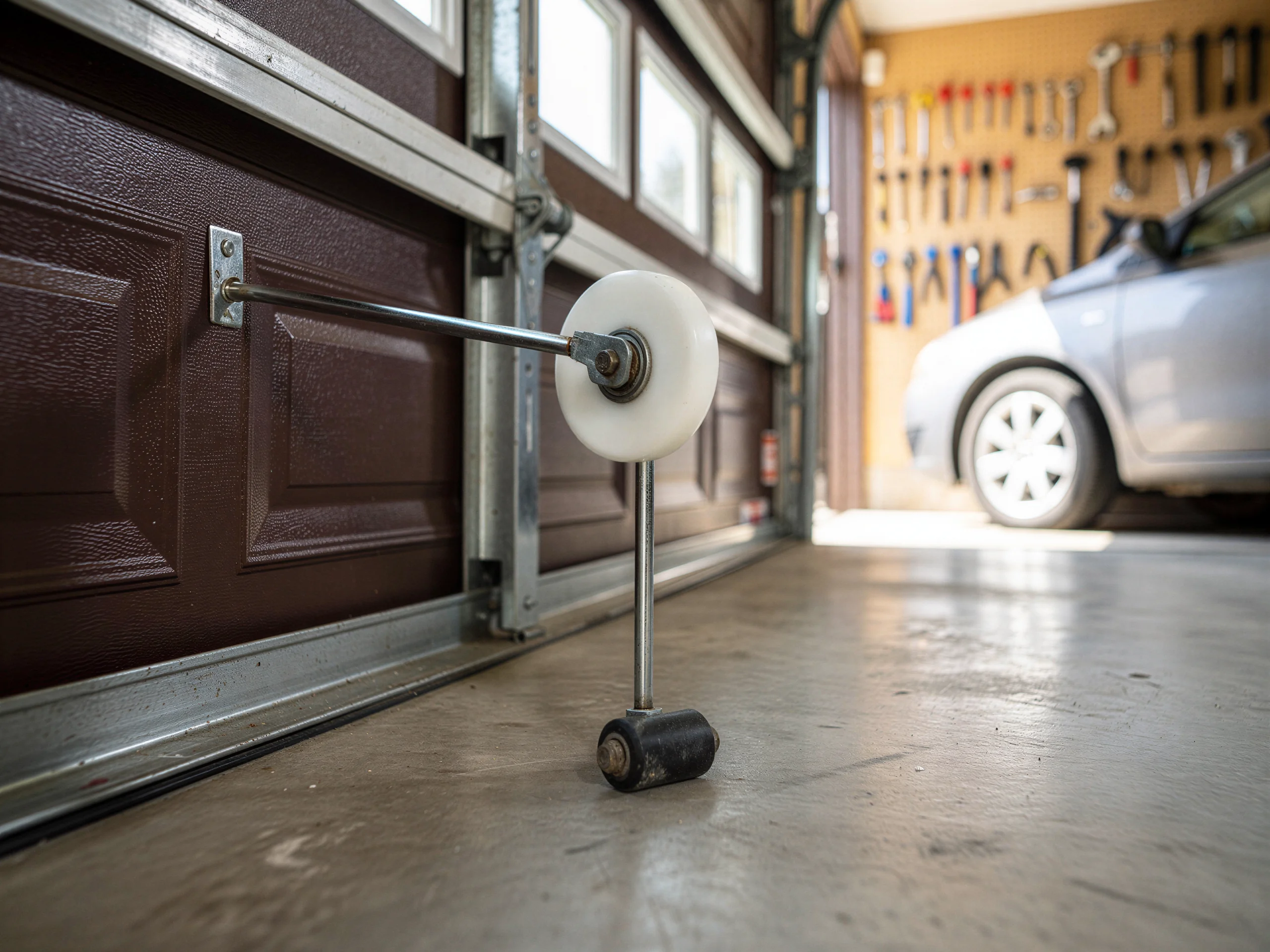
Steel rollers wear flat on one side and start binding in the track. Nylon rollers with worn bearings let the wheel wobble, which chews up the track edge and eventually lets the door jump the rail. You'll also see rust streaks on the track itself, or a roller stem that's bent where the door has been dragging instead of rolling.
Original hardware outlasted design
A lot of this area's housing dates to 1938 through 1985, with the median build year around 1953. Original track and roller hardware from that era wasn't built for the cycle counts a door sees today, and even replacement rollers installed years ago are now old enough to have worn bearings.
Rattle signals bearing failure
If you hear the sound change from a smooth roll to a rattle, that's the bearing going, not the motor. Don't ignore a roller that's jumped the track even once. Running the door on a roller that's partly off the rail puts side-load on the next roller down, and that's how a single worn roller turns into a bent track and a cracked panel in the same week.
Questions
Common questions
How do I know if it's the rollers and not the opener?
If the noise happens while the door is moving and changes pitch as it travels, that's almost always the rollers or track, not the opener. An opener problem usually shows up as the door not moving at all, or stopping and reversing. A grinding or clunking sound that tracks with the door's motion points to worn or cracked rollers.
Why do my rollers seem worse in winter?
Cold weather around here means real freeze-thaw cycling, and that stiffens roller bearing lubricant and tightens the track slightly right when winter driving means more daily door cycles. A roller that was marginal in fall often fails outright by midwinter for that reason.
Does my house's age matter for this repair?
It can. A lot of the area's housing was built between 1938 and 1985, with plenty of pre-1960 stock still running original or early-replacement track. Older track geometry runs looser tolerances than current hardware, so rollers on these doors tend to wear unevenly and need attention sooner than on a newer build.
Can I just replace the one roller that's making noise?
Usually yes, if the track is straight and the rest of the rollers look and sound fine. But a roller that's already jumped the track even once has likely put stress on the rail and the roller next to it, so it's worth having both checked in the same visit rather than coming back for a second one next month.
Explore more
Explore More Services In Monroeville, PA
Garage Door Service Built Around Monroeville's Older Housing Stock
Garage door service for Monroeville homes built mostly before 1960, matched to cold-weather wear on original hardware. Learn more →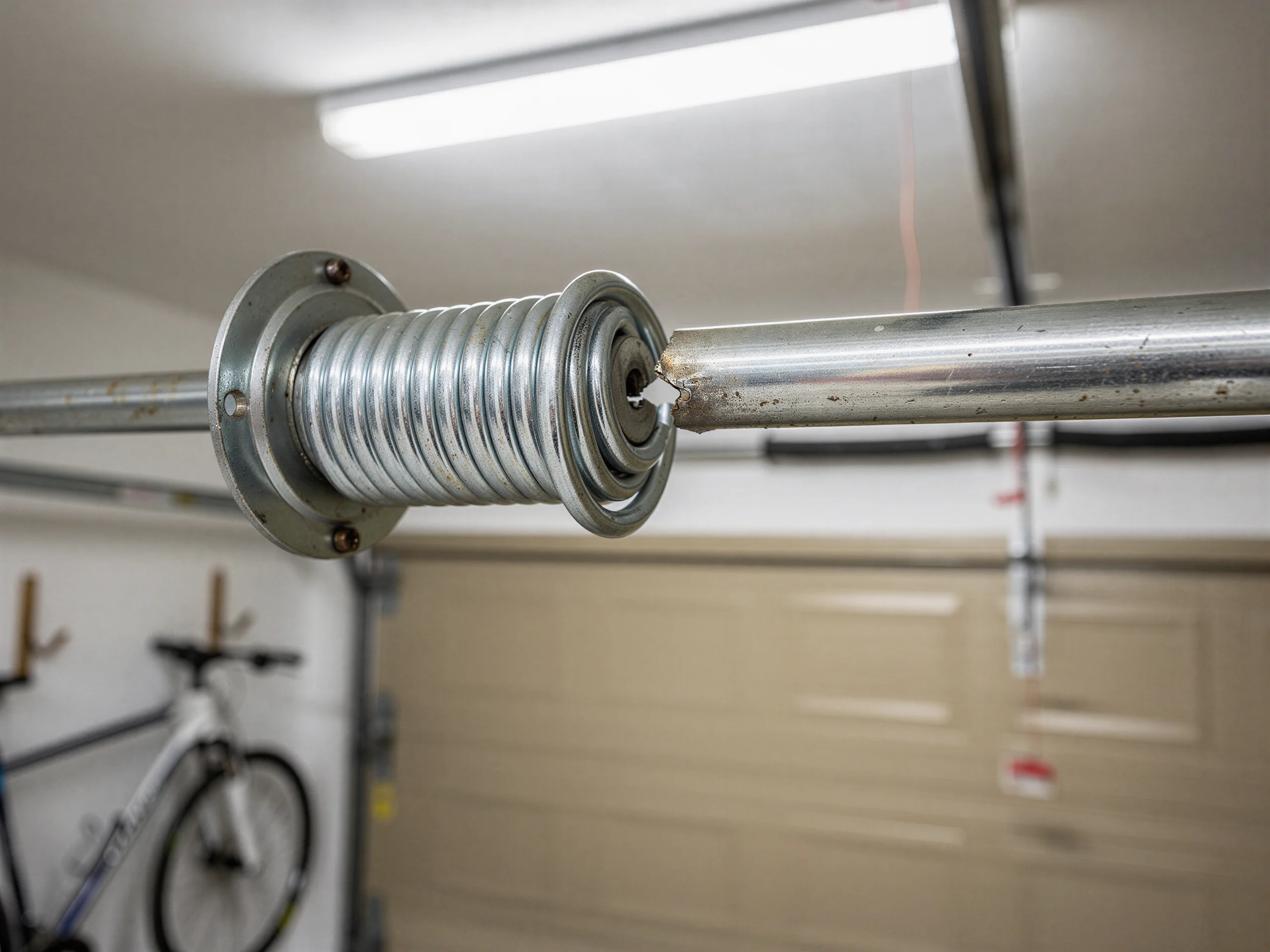
Garage Door Spring Repair, Explained for Monroeville Homeowners
Monroeville homes built mostly before 1960 still run original spring setups. Learn more →
Garage Door Maintenance Around Monroeville
Garage door maintenance for Monroeville-area homes built 1938-1985, where cold-climate hardware and original torsion systems wear differently than newer builds. Learn more →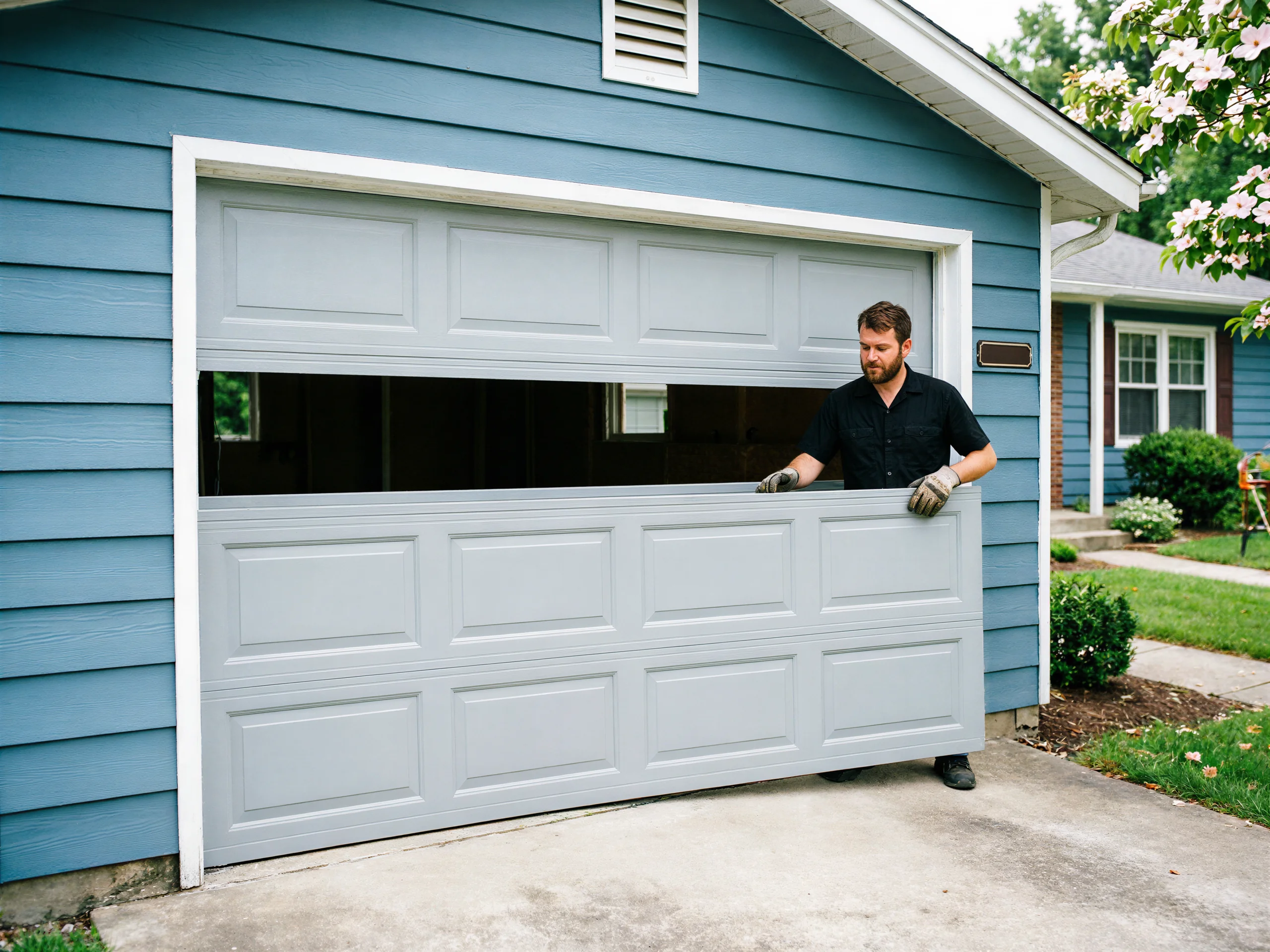
Garage Door Installation for Monroeville Homes
New garage door installation for Monroeville homes built 1938-1985, sized for original openings and rated for severe cold winters. Learn more →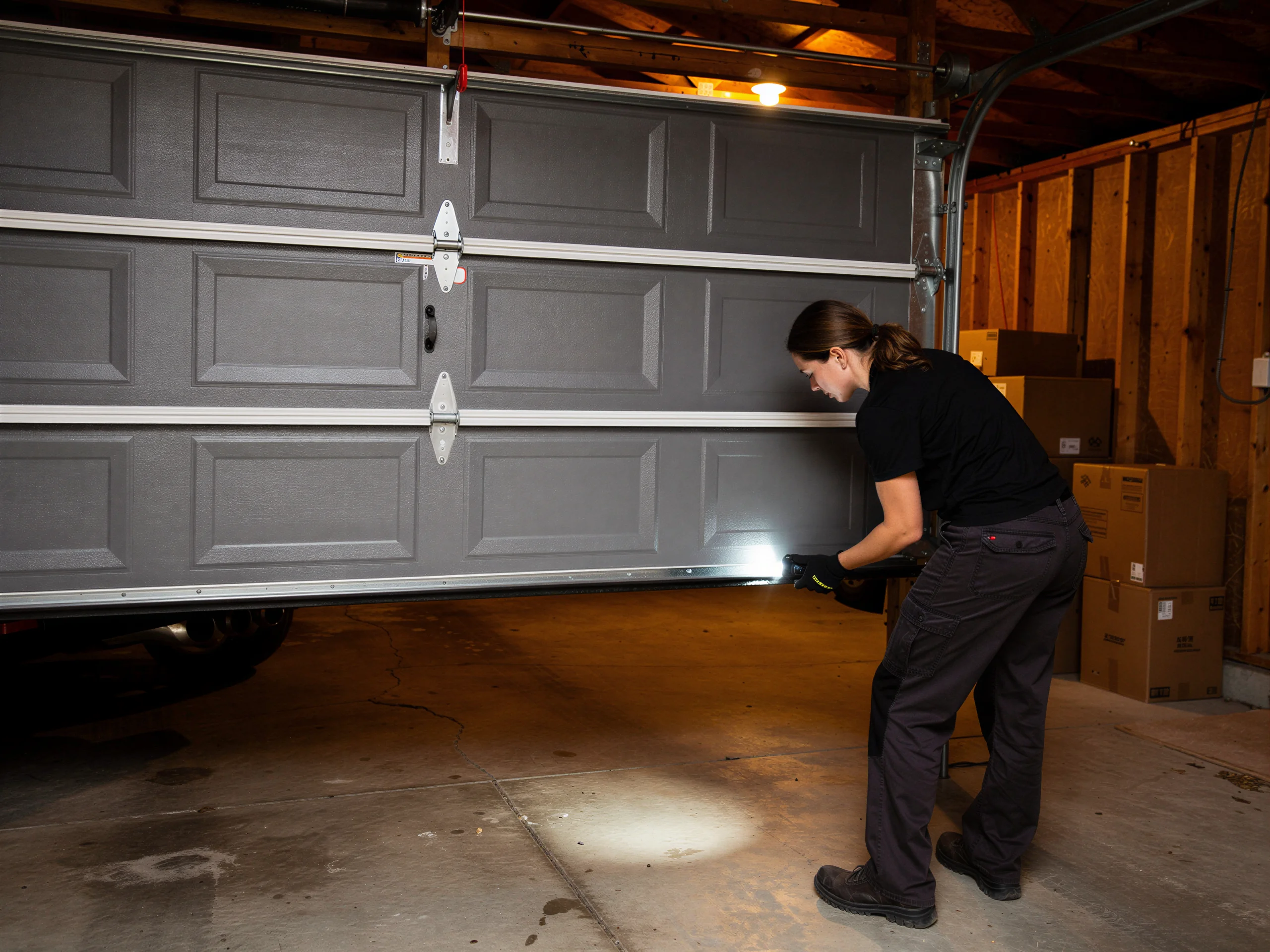
Garage Door Repair Built for Monroeville's Older Housing Stock
Garage door repair in Monroeville, PA built around homes from 1938-1985 and hard winters. Learn more →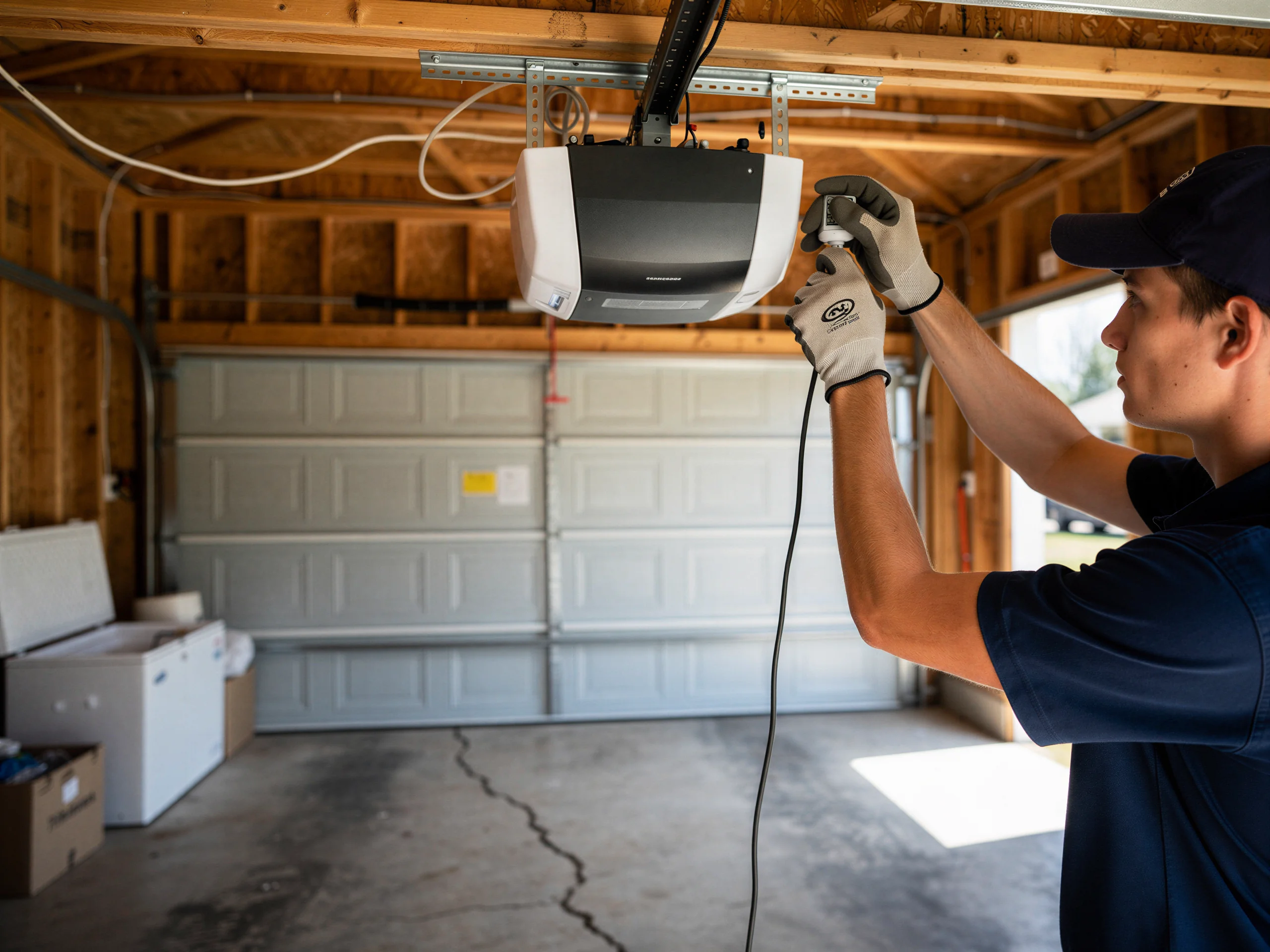
Garage Door Opener Installation Around Monroeville
Opener installs for Monroeville's pre-1960 housing stock and cold winters, covering the towns within 10 miles of the service area. Learn more →Ready when you are
Noisy or worn garage door rollers in Monroeville?
Monroeville Garage Door Pros repairs and installs garage doors, springs and openers in Monroeville, PA and the surrounding area.