Local detail
When to Call Someone
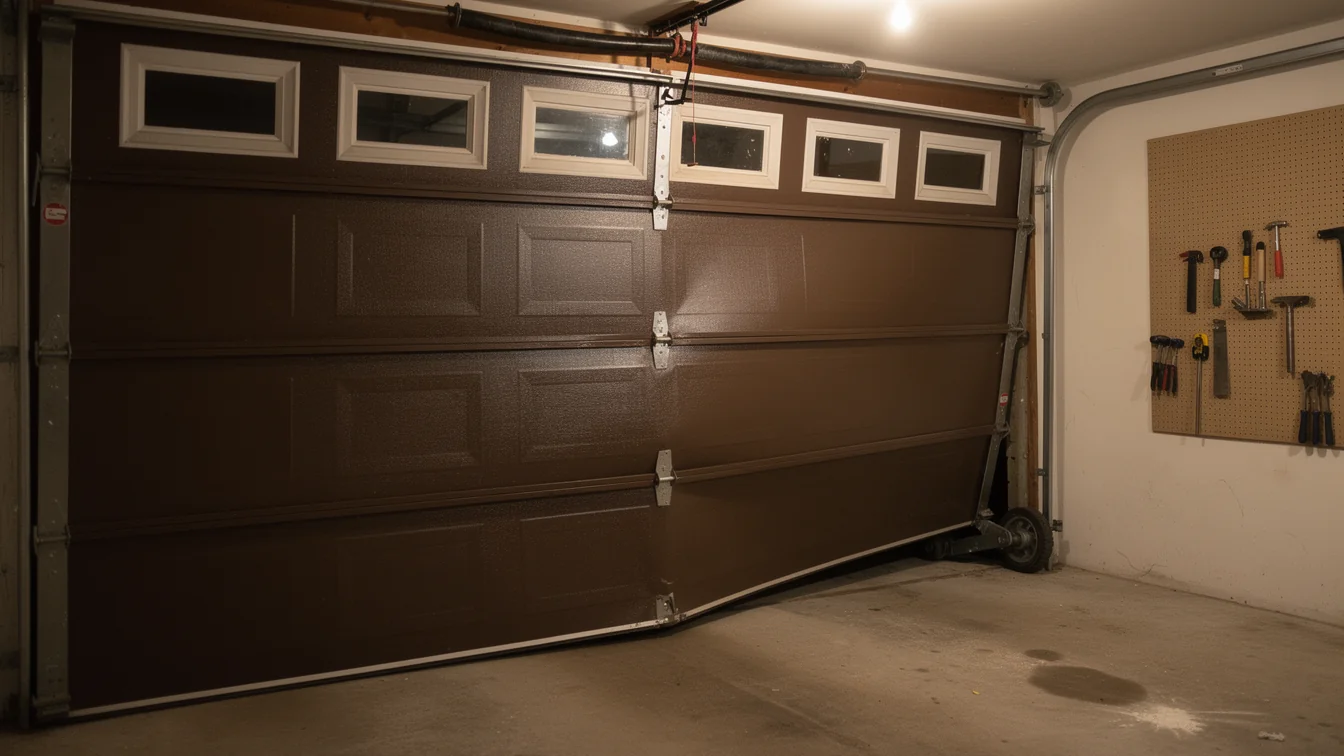
A door that squeaks when it opens is usually fine for another week. A door that bangs, pops, or grinds is not. In Monroeville, where most garages still run the torsion and extension spring hardware that came with houses built between 1938 and 1985, a loud pop followed by the door refusing to lift almost always means a spring has let go. That's not a lubricate-and-wait situation. A door stuck halfway, a cable that's jumped its drum, or a track that's visibly bent at a joint are all calls to make the same day, not the same week.
If the noise is a rhythmic thump once per rotation, that's usually a flat spot on a roller, which can wait for a scheduled visit. If it's a grinding sound from the opener head itself, that's the gear set wearing down, which also isn't urgent but won't fix itself. The honest answer is that most noise complaints aren't emergencies. The ones involving a dead stop mid-cycle, or a door that's dropped an inch and won't move, are.
The area
The Problem
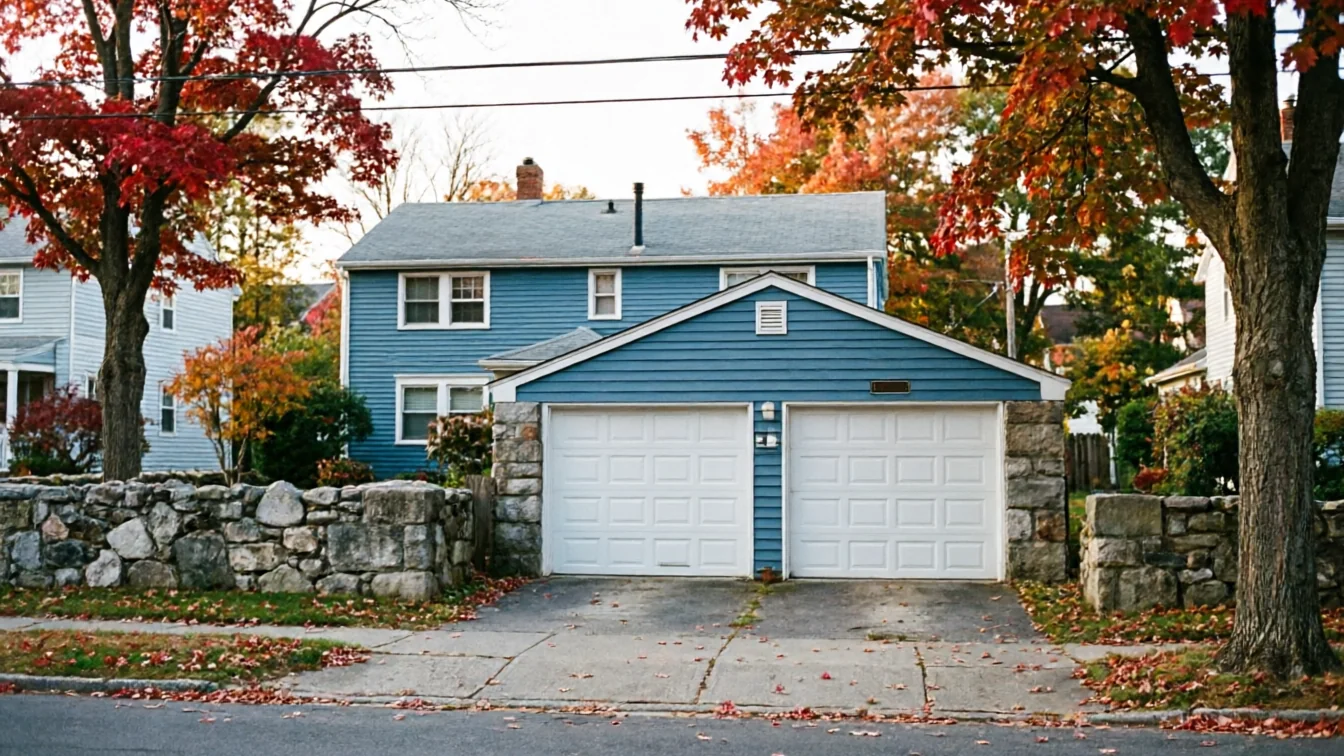
Across the 89 named areas that make up this part of the region, the housing stock is overwhelmingly pre-1960, with a median build year around 1953. That matters because a door installed or replaced on a house that old is often running on hardware that was sized, torqued, and mounted to specs nobody uses anymore. Side-mounted torsion springs on an older single-car opening behave differently than the centered torsion bar setups you'd find on anything built after the 1980s remodel wave.
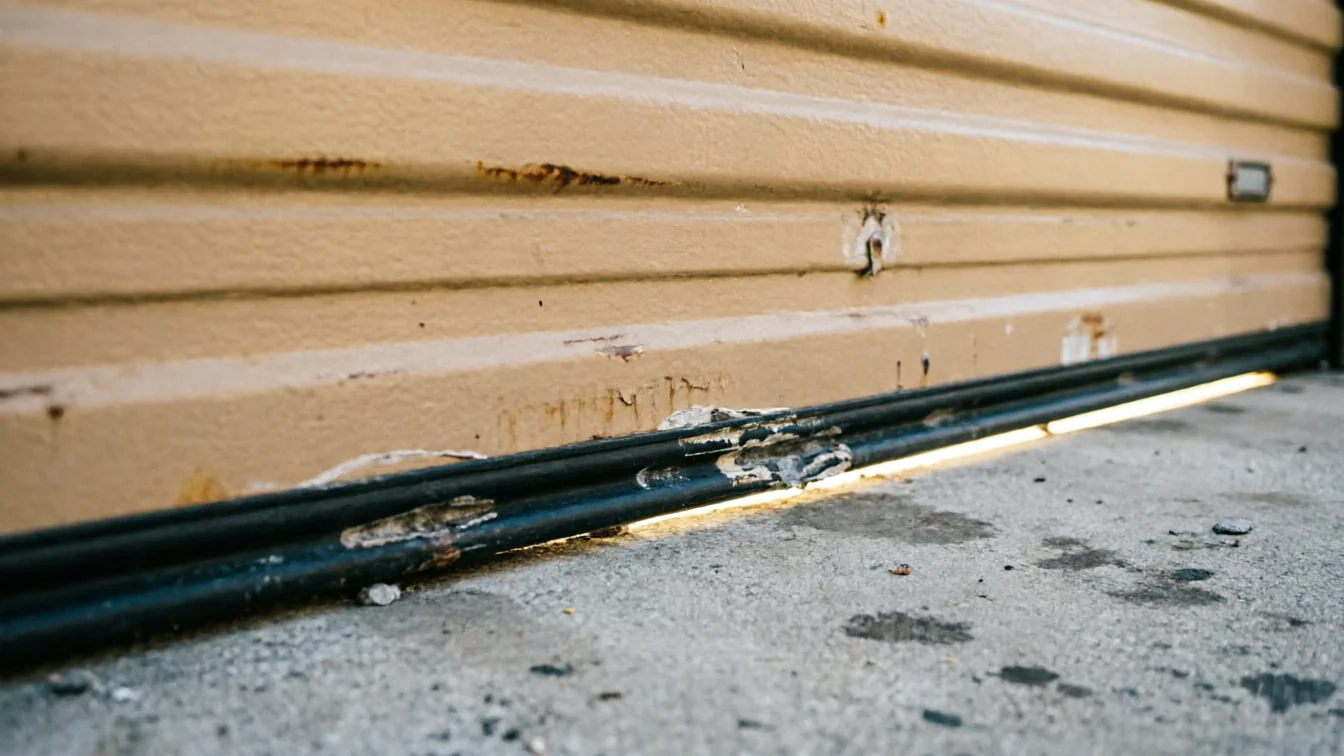
The noises you hear are usually the hardware telling you it's fighting its own age. A spring wound for a door that's been repainted, reinsulated, or had a heavier replacement panel hung on it is working outside its original calculation, and it announces that with groaning on the way up and a hard drop on the way down. We don't guess at spring weight from the noise alone, but a consistent grinding paired with visible gaps in the coil winding is enough to tell us it's close to done, not just noisy.
What we find
What It Costs
We're not going to put a number here that doesn't apply to your door, and we don't have a flat rate that fits every house in this area, especially given how much the hardware era varies. A worn roller swap on a newer door costs a lot less than resetting cables on an original 1950s track system where the mounting brackets themselves may need replacing because nothing standard bolts up to them anymore.
What we can say is that with a median household income here around $62,874, most owners we talk to want the real number before we start, not after. We quote on-site once we've actually looked at the spring size, the track condition, and whether the opener is original or already replaced. If a repair is going to cost close to what a full replacement runs, we'll tell you that straight, rather than patch something that's going to fail again in a year.
How we work
What the Weather Here Does to It
This area sits in a severe cold climate band, and that's not just a line about needing a coat. Cold steel contracts. Torsion springs lose a measurable amount of lift force in freezing temperatures, which means a spring that was marginal in October can fail outright in January, often with the loud bang that brings people out to the garage at 6 a.m. Grease that worked fine all summer stiffens up, and that stiffness itself causes grinding and chatter that wasn't there two months earlier.
On the pre-1960 housing stock common from Monroeville out through Trafford, Turtle Creek, and Churchill, a lot of garages were never insulated to begin with, so the door and its hardware sit at close to outdoor temperature all winter. That's a harder environment on a spring than a garage that stays even ten degrees warmer. If your door has been quiet all year and suddenly starts popping once the cold sets in, that's not coincidence. That's the cold finding the weak spring you already had.
Talk to a local pro
Garage door trouble in Monroeville?
Same-day service with honest, upfront quotes.