Local detail
When to Call Someone
If your door is sticking, banging, or the opener is straining, call before you guess. Most houses in this part of Monroeville went up between 1938 and 1985, with the median build year sitting around 1953 - and across the 89 named areas in this service territory, the stock skews even older, mostly pre-1960. That matters because a door that age is likely on its second or third spring, maybe its original track, and the failure you're hearing is rarely the first one that section has had.
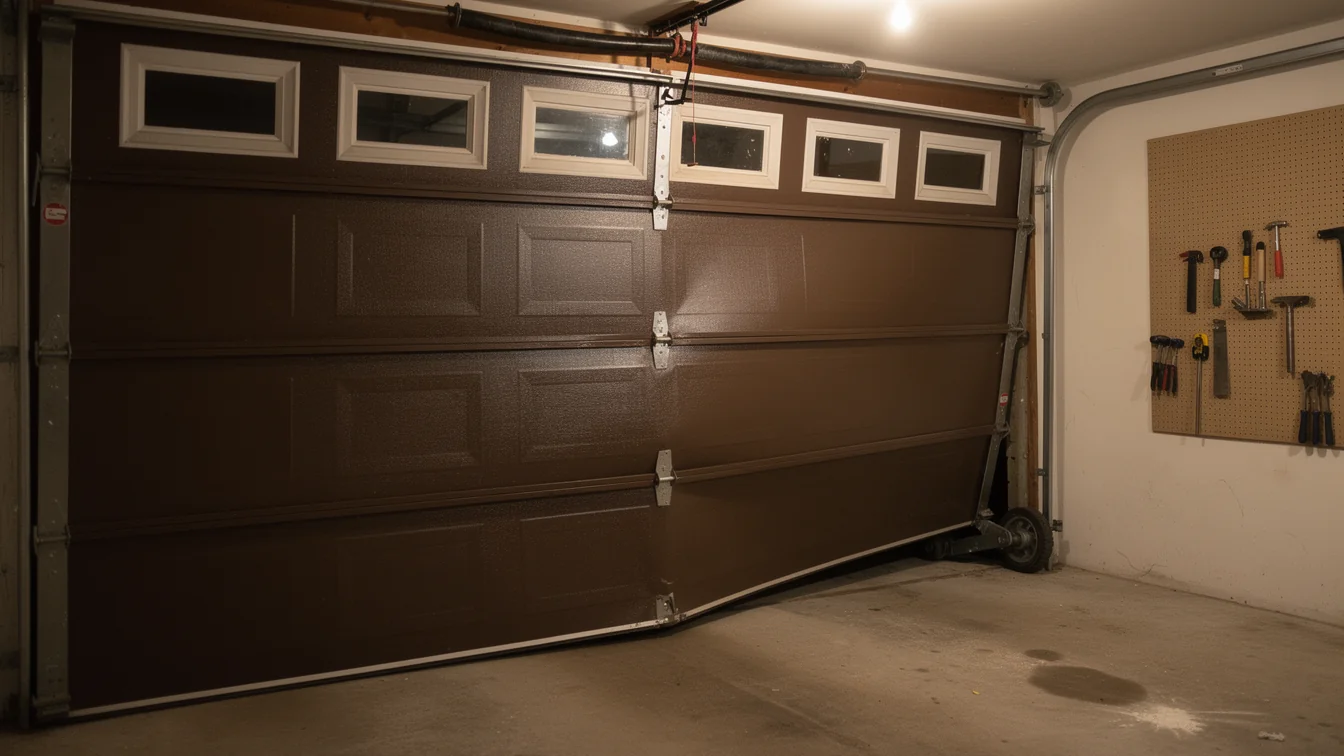
Call when the door reverses on its own, when one cable looks frayed but the other doesn't, or when the opener motor runs but the door doesn't move - that's a spring or cable problem wearing an opener's symptoms. Don't wait on a door that's dropped crooked in the opening; that's a broken torsion spring or a snapped cable, and running it again can bend the track or crack a panel.
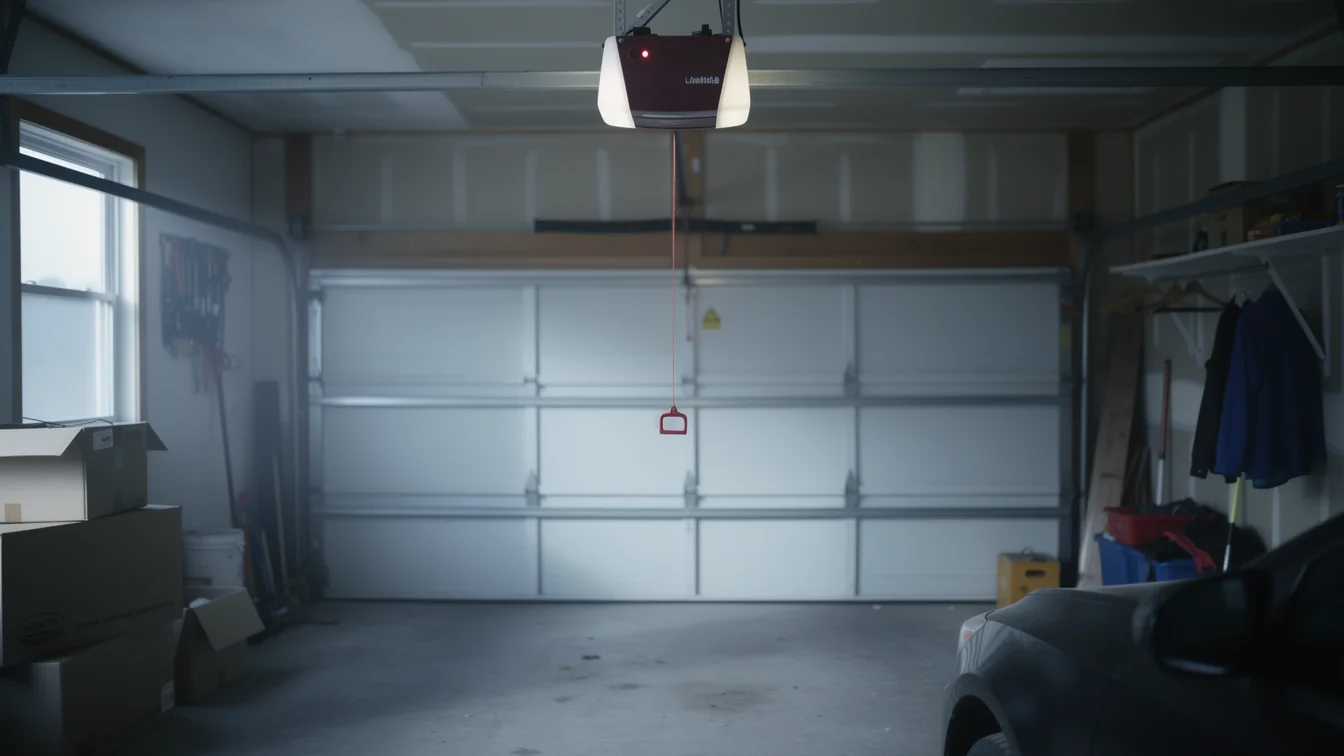
What you shouldn't call for: a door that's merely noisy but still tracks straight and reverses properly on contact. That's usually rollers and hinges needing lubrication, and it's worth trying yourself before paying a service call for it.
The area
The Problem
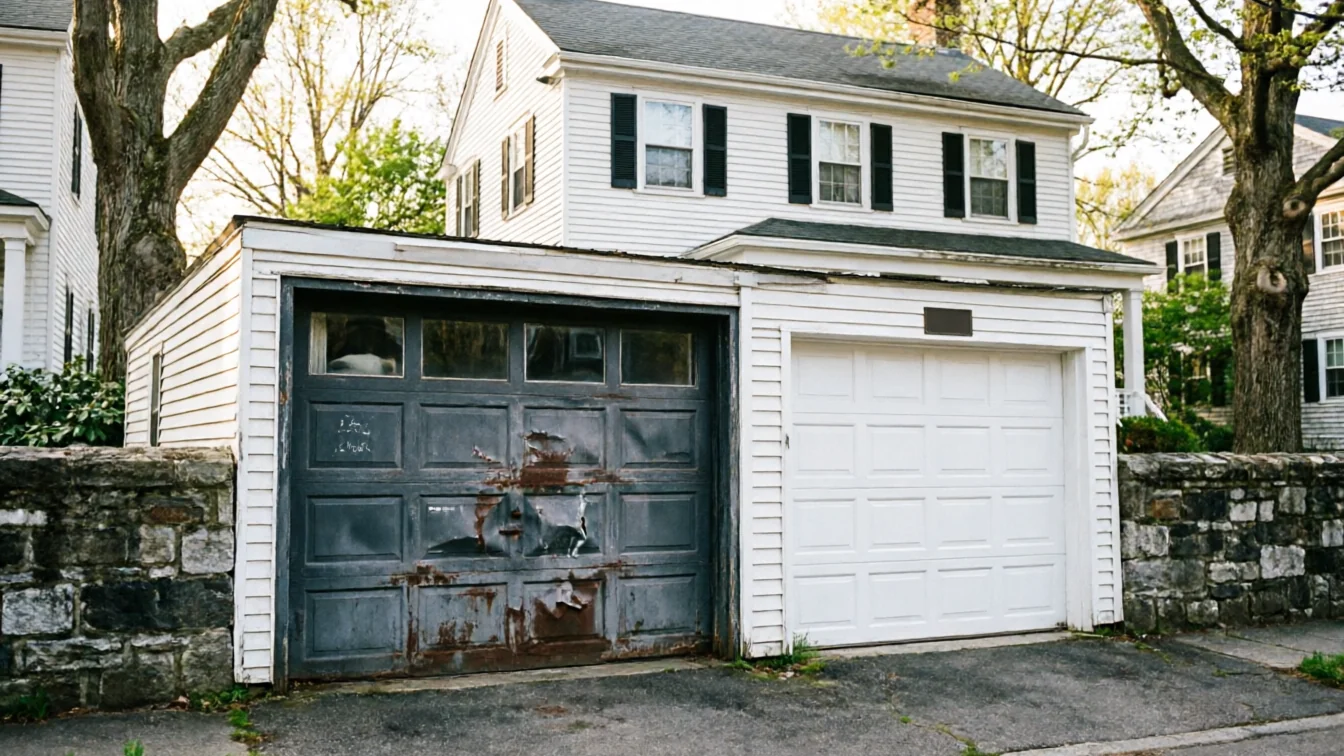
The core issue with a door this old isn't usually the door itself - it's what's attached to it. A one-piece or early sectional door built in the 1950s or 60s was engineered for hardware sizes and spring tensions that aren't standard anymore. When a torsion spring on one of these fails, the replacement often isn't a direct swap; it has to be matched by hand, which adds labor time most newer installs don't need.
Track is the other recurring issue. Original steel track on a house from this era has usually been re-shimmed or re-hung at least once over 60-plus years of settling, and once it's out of plumb by more than a little, the rollers chew through themselves fast no matter how often you lubricate them.
The honest limit here: if the door's structural frame is sagging or the track brackets have pulled loose from wood that's rotted at the lag points, we can patch that once. We won't keep patching it. A door that needs its third bracket repair in two years is a door that needs replacing, not a door that needs us back a fourth time.
What we find
What It Costs
We don't publish a flat price here because the variable that actually drives cost on a house this age isn't the door - it's whether the spring, track, or opener has to be custom-matched to original hardware, or whether a standard replacement part fits. A straightforward roller or cable swap is quick. Matching a torsion spring to a non-standard drum from a 1950s installation takes longer and costs more, every time.
The median household income across this service area runs around $62,874, which is the number we keep in mind when we lay out options: a repair that buys another two or three years versus a full replacement that resets the clock. We'll tell you honestly which one makes sense for your specific door rather than pushing the bigger job by default.
As a rule: if we're quoting a second major repair on the same door within 18 months, replacement is usually the better use of that money, because you're paying labor twice to end up at the same door you started with.
How we work
What the Weather Here Does to It
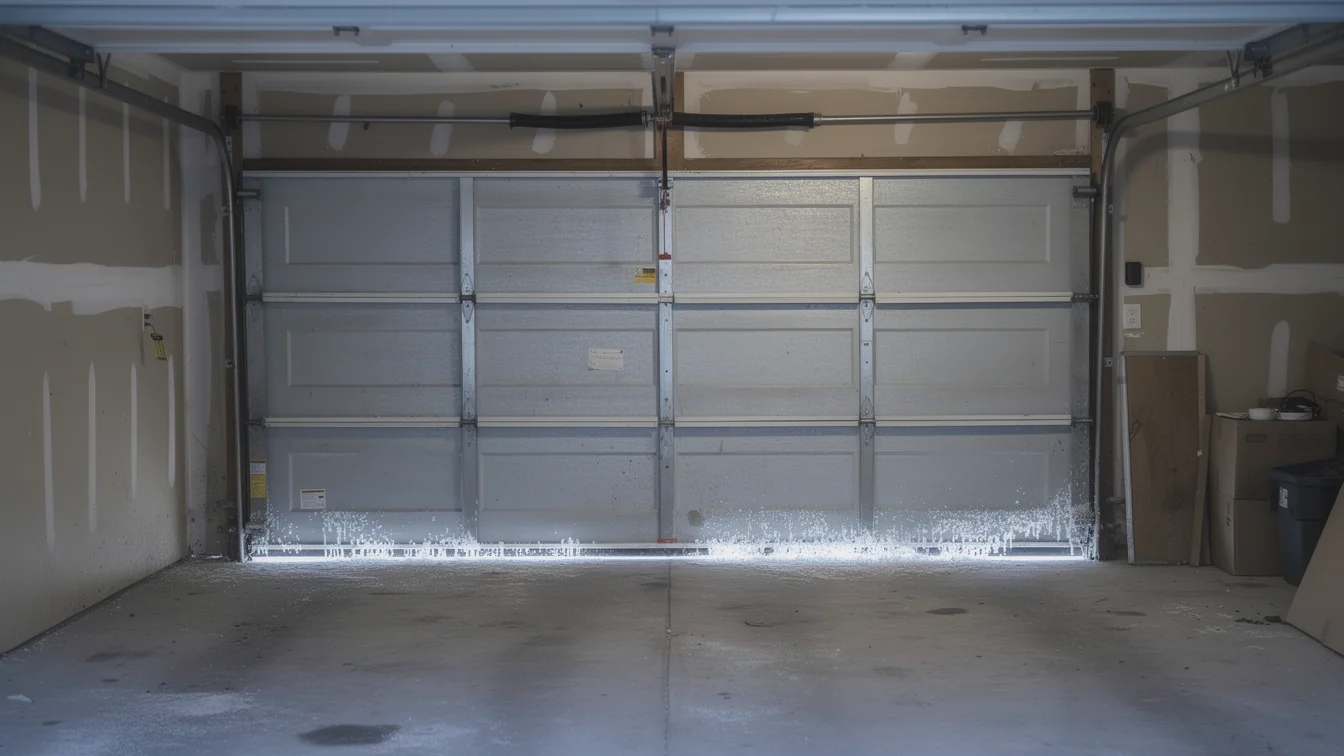
This area sits in a severe cold climate band, and that's hard on garage door hardware in specific ways. Steel sections contract in deep cold, which is why a door that closed flush in October can bind or gap along the bottom seal by January. On original doors from the 1950s and 60s, that seasonal shrink-and-swell cycle has been happening for decades, and the wear shows up as rust at the hinge pivots and stiffness in springs that were already near the end of their rated cycles.
Extension and torsion springs both lose tension faster when they're repeatedly cycling through freeze-thaw swings rather than staying at a stable temperature. If your opener strains more in January than it did in September, that's not the opener aging - that's the spring compensating for cold-stiffened steel and asking for more force to lift the same door.
We can't stop the cold from doing that. What we can do is set spring tension and lubricate with cold-rated grease so the door doesn't fight itself every winter, which on a house this old is usually the cheaper fix long before replacement makes sense.
Talk to a local pro
Garage door trouble in Monroeville?
Same-day service with honest, upfront quotes.