Local detail
When to Call Someone
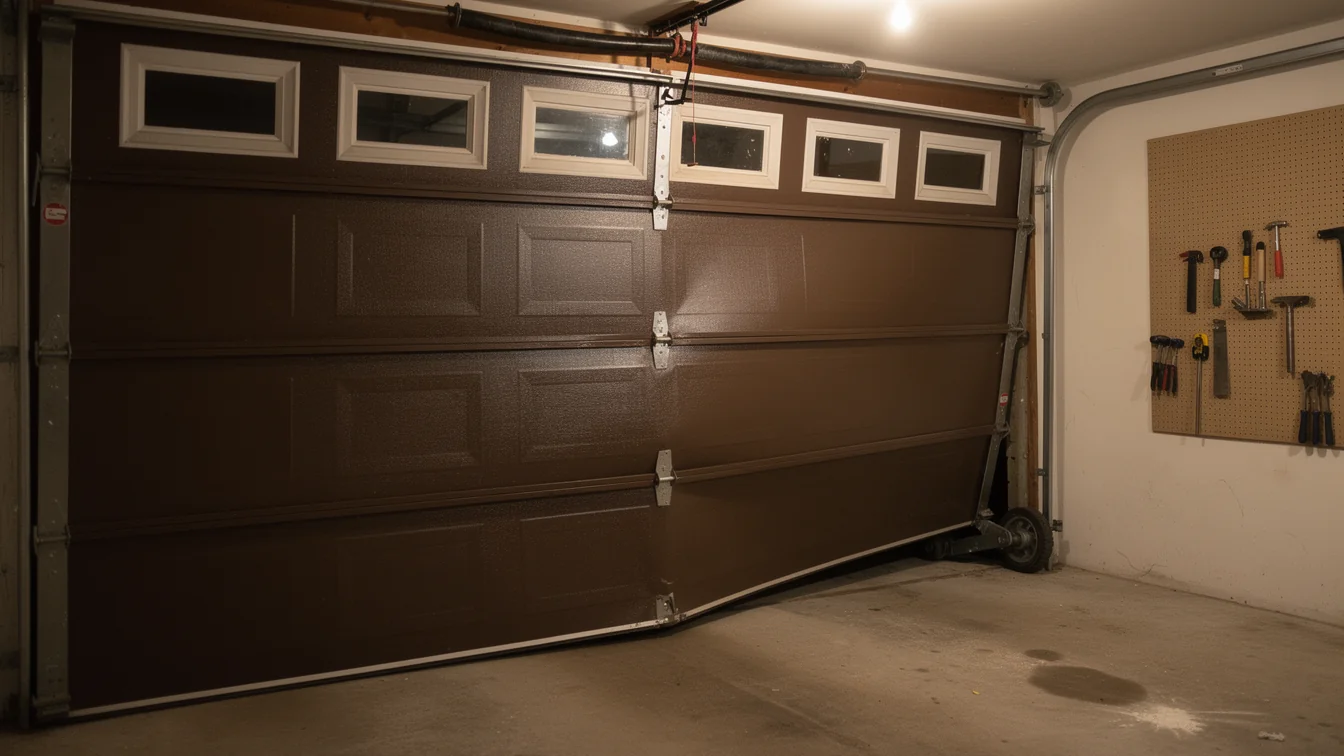
If your garage is a detached structure sitting apart from the house - common on the older streets around Monroeville where houses went up between 1938 and 1985 - a stuck or off-track door often means a bigger problem than on an attached garage. Detached units built in that era usually got a lighter frame and less bracing than what code calls for today, because nobody expected automatic openers hanging off that header when the garage was framed. If the door binds, sags at one corner, or the opener strains and reverses partway up, don't keep running the opener trying to force it - that's how you tear the header loose from a frame that was never built for the load.
On attached garages the calculus is different. The garage shares a wall with living space, so a cable snap or spring failure isn't just a stuck car - it's a door that won't seal, and that wall is now your weak point for heat loss and pests. Call before you try to muscle a stuck attached door down by hand; the shared wall means any racking in the track can telegraph into the house framing faster than it would on a standalone structure.
The area
The Problem
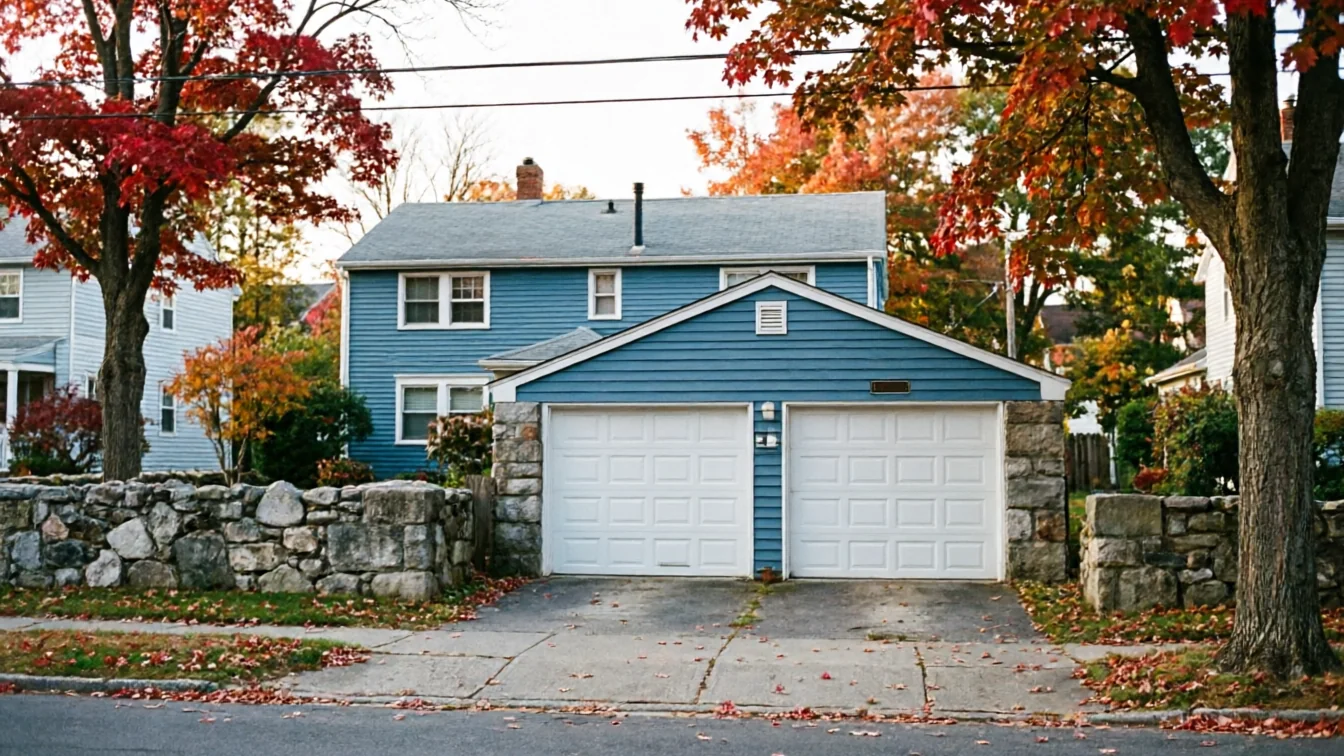
Monroeville's housing stock is mostly pre-1960, same as the 89 named areas tracked across this part of the region. That means a lot of original garages - detached ones especially - were sized and framed for a single-car, single-panel door, not the wider sectional doors and heavier openers that get installed today as replacements. When a detached garage from that build era gets a modern door and opener bolted onto 60-plus-year-old framing, you often see the header flex or the track pull away from the jamb within a few seasons.
Attached garages from the same period have a different failure pattern: the shared wall with the house means the garage door is also part of the home's air seal. On houses built mid-century, that wall often wasn't insulated to any real standard, so the door itself - not just the weatherstripping - ends up doing double duty as a thermal barrier it wasn't designed to be. Either way, the age of the structure, not just the door, is usually the actual problem.
What we find
What It Costs
We can't quote a number here without a real job in front of us - a detached garage with a racked header costs differently to fix than an attached garage where the door is also a wall-seal problem, and the labor runs different for each. What we can tell you is what drives the cost: on detached structures from the 1938-1985 build wave, the frame itself sometimes needs shoring up before a new door goes in, which is extra work beyond the door and opener. On attached garages, if the shared wall was never insulated, swapping to an insulated door is often the better long-term move rather than patching an old single-layer panel.
Household income across this service area runs a median of $62,874, and most of the detached-garage jobs we see lean toward repair-and-reinforce rather than full replacement, simply because the structures are older and a full teardown isn't always worth it for a one-car garage. We'll tell you straight if your detached garage's frame is the real cost driver before we talk door price.
How we work
What the Weather Here Does to It
Monroeville sits in a severe cold climate band, and detached and attached garages take that differently. A detached garage has no shared wall to borrow heat from the house, so in winter the door, track, and opener are exposed to the full swing of outdoor temperature on all sides. Steel tracks contract, nylon rollers stiffen, and torsion springs lose a little tension - all faster on a detached structure than an attached one, because there's no buffering from the house at all.
Attached garages get some benefit from the shared wall, but that same wall means cold air pulled in around a worn seal travels straight into the house side, not just the garage. On the pre-1960 stock that makes up most of this area, neither structure type was built with today's cold-climate sealing standards in mind, so winter is when older detached doors bind on frozen tracks and older attached doors let the most cold through the wall they share with the house.
Talk to a local pro
Garage door trouble in Monroeville?
Same-day service with honest, upfront quotes.