Local detail
When to Call Someone
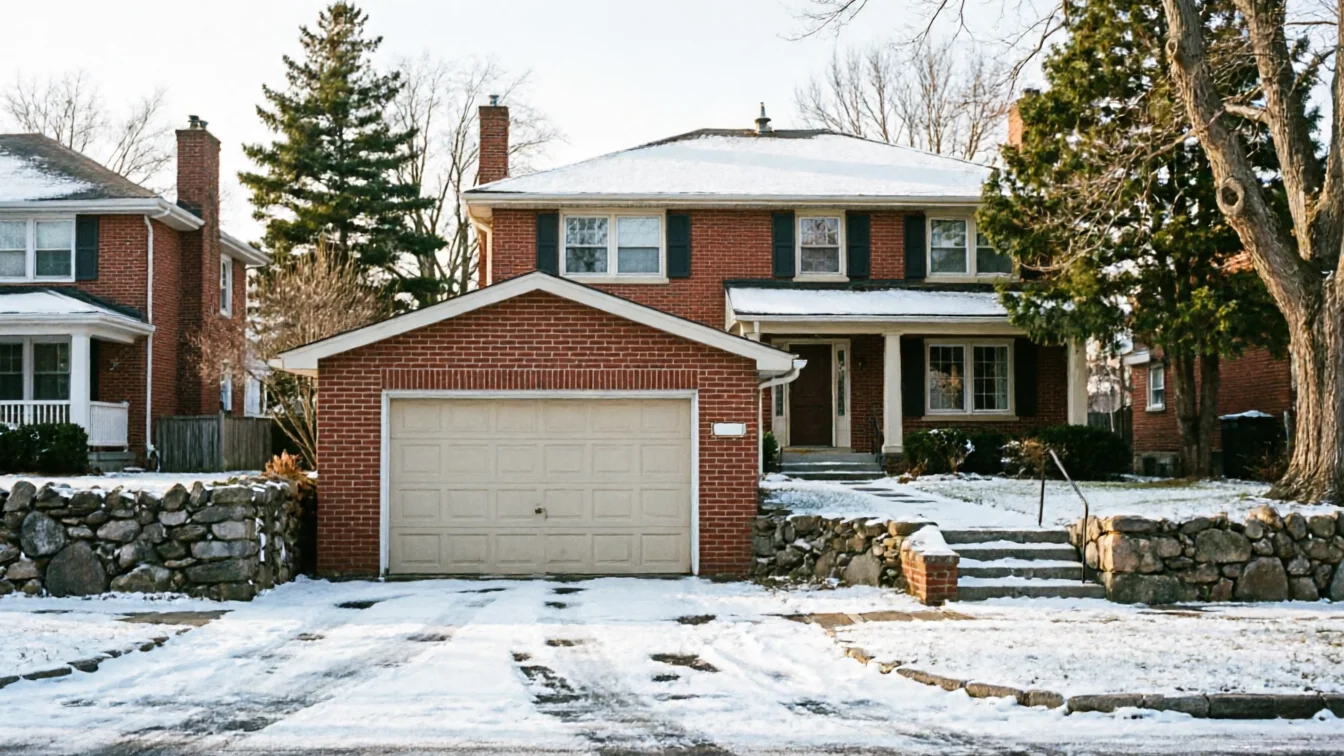
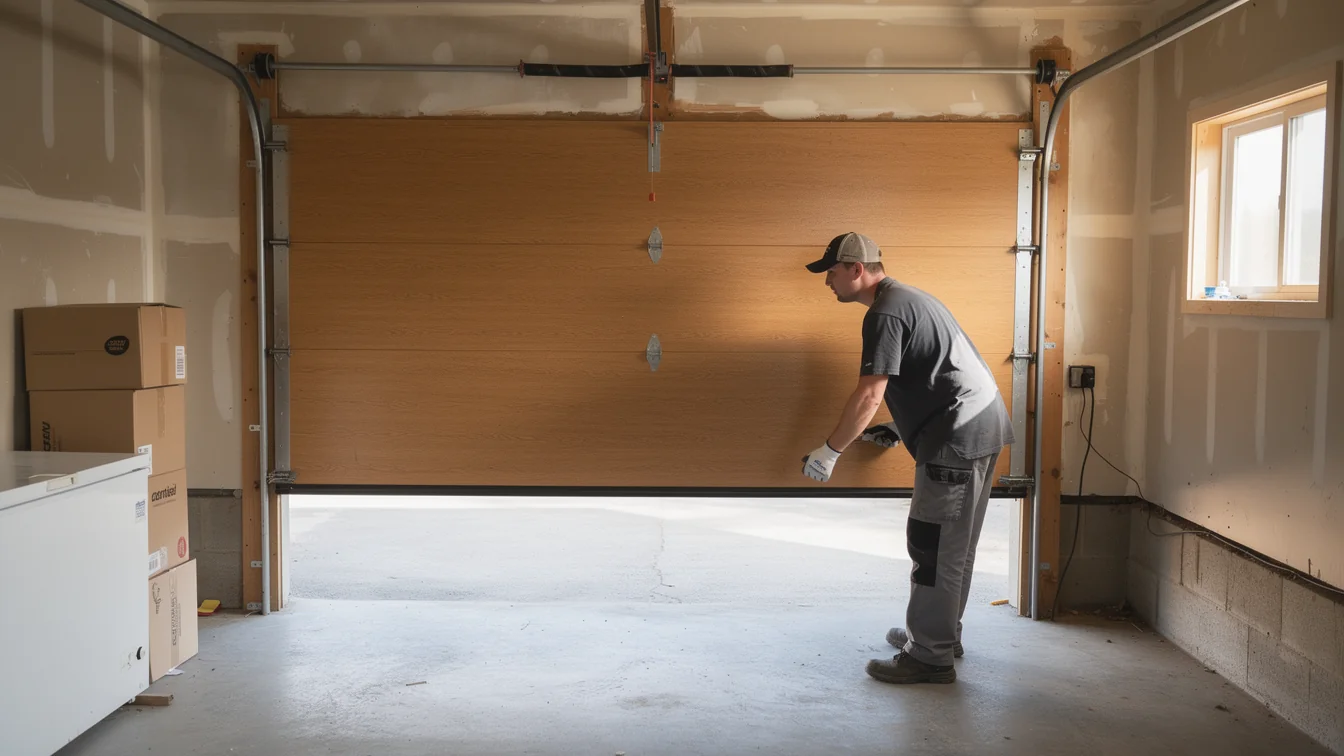
If your double-wide door racks visibly in a gust - the top corner flexes, or you see daylight at the seam between panels mid-wind - stop opening and closing it and call. A door that's already bowed will keep bowing, and running the opener against a track that's pulled off true just finishes the job. Same goes for a track bracket that's pulled loose from the jamb; you'll often hear it before you see it, a knock or groan on windy nights. Monroeville sits in a corridor where houses built in the 1938-1985 run (median 1953) mostly carry original jamb framing, and that framing was built to hold a single garage door, not the wider two-car openings a lot of owners added on later. If the door is a double and it's reacting to wind at all, that's worth a look before the next storm, not after it.
The area
The Problem
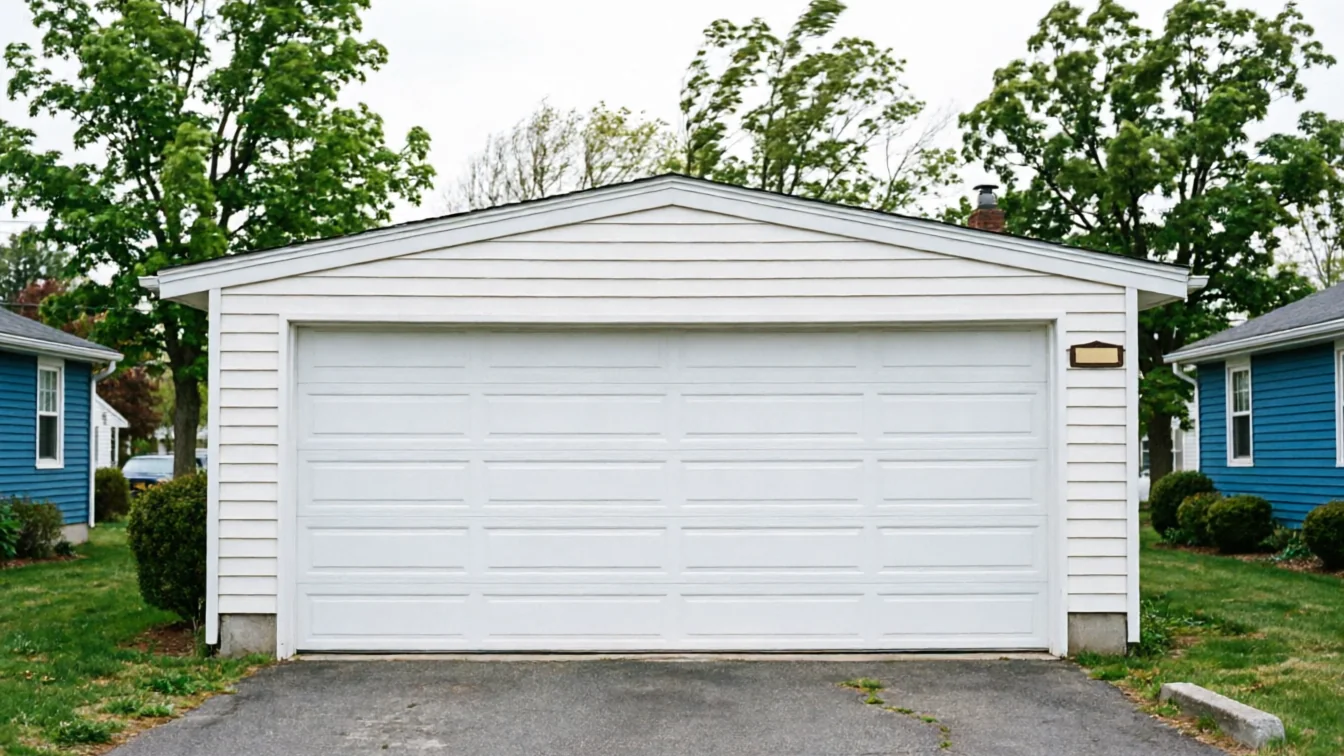
A single garage door is narrow enough that wind load mostly just pushes on it. A double-wide door - 16 feet across instead of 9 - catches roughly twice the surface area, and the center of the door has nothing holding it but the panel seams and whatever reinforcement strut is (or isn't) bolted across the back. On the pre-1960 housing stock that makes up most of Monroeville and the surrounding named areas, a lot of those wide openings were cut into garages that started life single-car, with jamb studs and header framing sized for the smaller door. Add a wide door onto narrow-door framing and you get more flex at the sides under load, which is exactly where track brackets pull loose. It's not a defect in the door itself most of the time - it's a mismatch between a wide door and framing that predates it.
What we find
What It Costs
We don't have a flat number to quote here, and anyone who gives you one over the phone without seeing the door is guessing. Cost depends on what's actually bent: a single bowed panel is a different job than a cracked stile, a pulled track bracket, or a header that needs sistering before a new door goes up. What we can tell you is the order of priorities - track and hardware first, panel replacement second, full door replacement only when the frame itself is racked. On houses from the 1938-1985 era, the honest answer is sometimes that patching the framing costs more than just reinforcing it properly once and being done. We'll tell you straight if a repair isn't worth doing twice.
How we work
What the Weather Here Does to It
This area sits in a cold, severe climate zone, and that matters for wide doors in two ways beyond straight wind pressure. Cold snaps stiffen the nylon rollers and tighten steel cable just enough that a door already under wind strain binds harder in the track - so a gust that would just flex a door in October can crack a stile in January when everything's contracted and less forgiving. And repeated freeze-thaw on older jamb framing, common across the pre-1960 stock that dominates most of the 89 named areas around here, loosens the fasteners holding brackets to wood over years, which is the same hardware a wide door leans on hardest in wind. None of that shows up as a sudden failure - it shows up as a door that's gotten noticeably more flexible in the wind than it was three winters ago.
Talk to a local pro
Garage door trouble in Monroeville?
Same-day service with honest, upfront quotes.