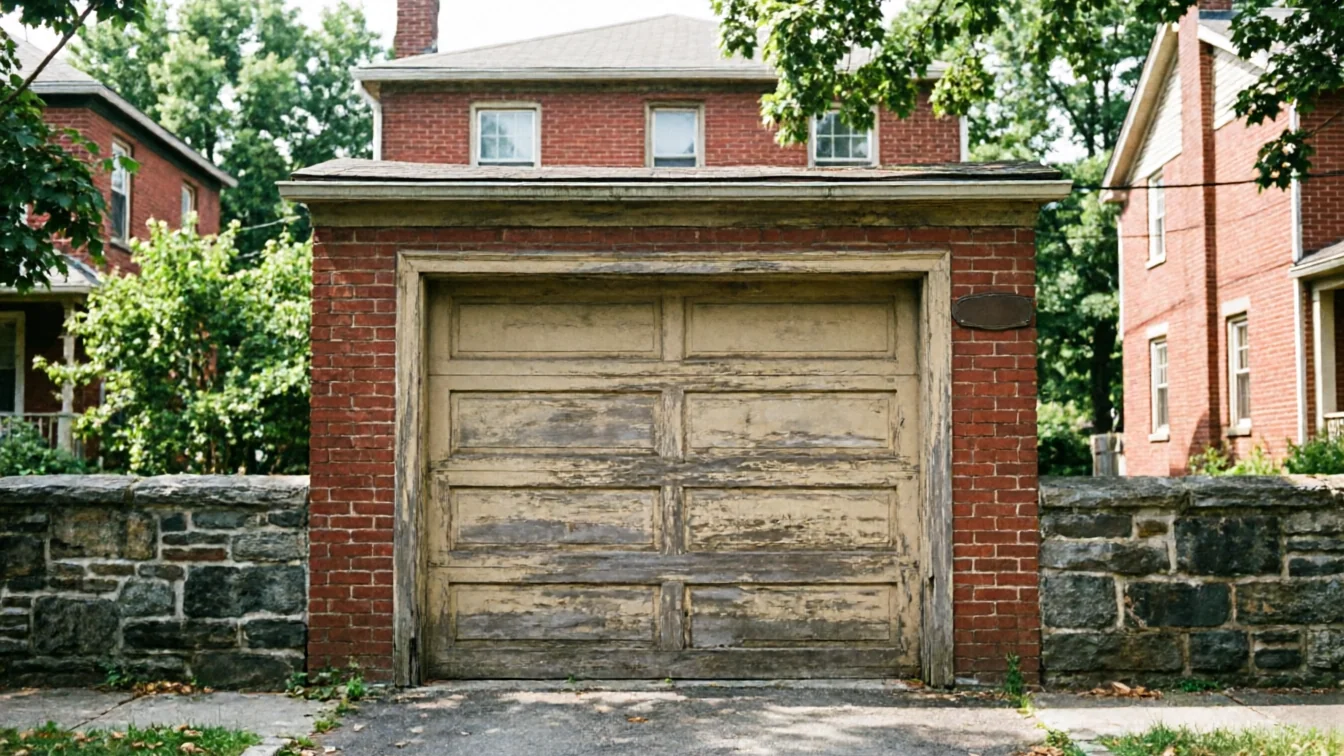
Local detail
When to Call Someone
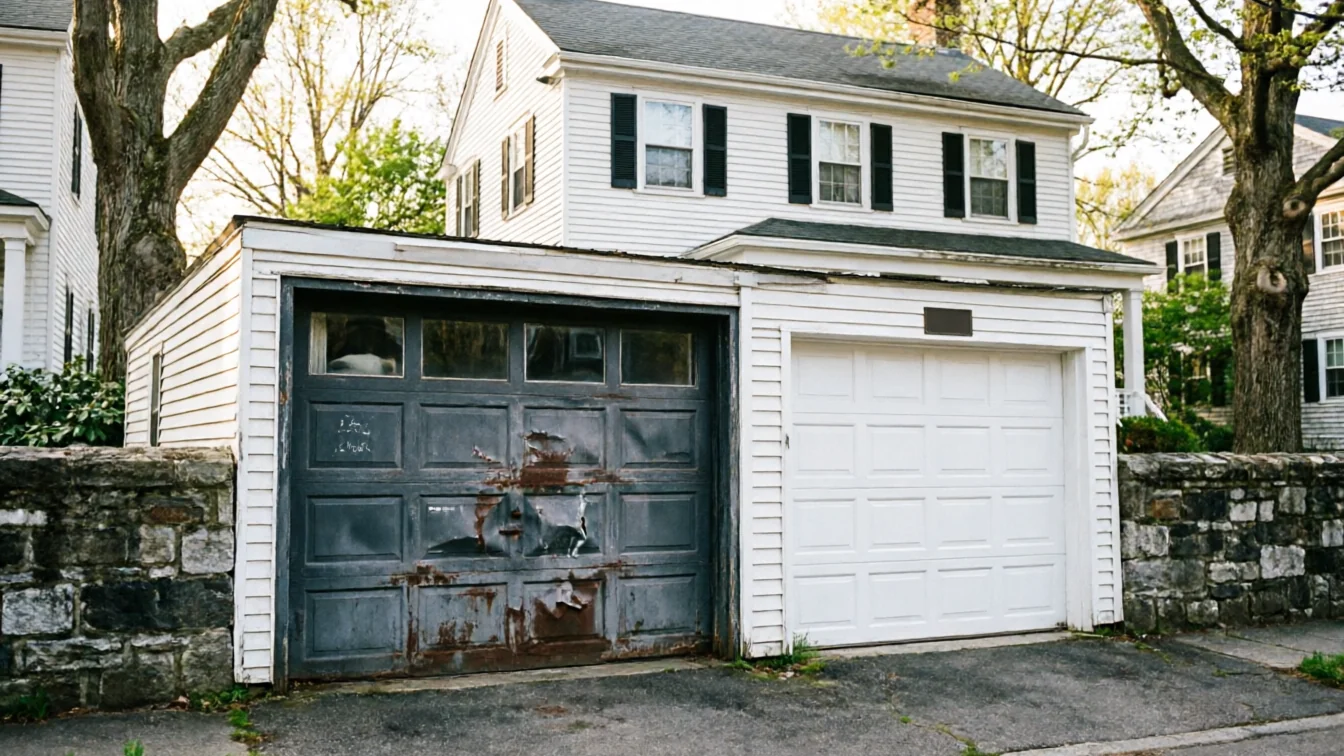
Most houses around Monroeville were built between 1938 and 1985, with the bulk going up near 1953. That means a lot of doors in this area are original, or close to it - wood or early steel panels on hardware nobody manufactures the same way anymore. If your door is sticking on one side, making a grinding noise when it opens, or the opener strains and reverses before it reaches the floor, that's not a DIY weekend fix. Call someone when a spring looks stretched or uneven, when a cable has frayed strands, or when the bottom panel has rotted or rusted through at the corners. On a door built when Eisenhower was in office, a part failing on one side usually means the rest of the hardware is close behind. Waiting until the door won't open at all means you're calling for an emergency instead of a scheduled repair, and that's a worse spot to be in with a door this old - parts for 1950s track systems aren't sitting on a shelf.
The area
The Problem
Monroeville and the small boroughs around it - Trafford, Wilmerding, Turtle Creek, Churchill, East Pittsburgh - share the same building wave. Pre-1960 construction dominates across these 89 named areas, which means a huge share of garage doors were installed, or replaced once, decades ago on hardware sized for a different era. Track widths, spring wind counts, and torsion tube diameters from that period don't always match current stock parts. A repair that would take twenty minutes on a 2015 door can mean sourcing an obsolete bracket or adapting a modern spring to old brackets. This isn't a flaw in the door - it's just age meeting a parts supply chain that moved on. The honest problem homeowners here run into is that the door looks fine from the driveway but the torsion hardware underneath has outlived its practical service life, and nobody notices until it fails.
What we find
What It Costs
We don't have a flat number to hand you here, because the answer depends entirely on what's actually failing - a single spring is a different job than a full track-and-roller rebuild on a door this old. What we can tell you is what drives the cost on a pre-1960 Monroeville door: non-standard hardware sizing, whether the panel itself is salvageable or needs full replacement, and how much of the original track survives square. With median household income in this service area around $62,874, a lot of owners want to know up front whether a repair is worth doing at all versus putting that money toward a new door. Our honest read: if the frame and track are still straight and only the spring or opener has failed, repair almost always makes sense. If the panels are rusted through or the track has warped from decades of settling, you're often better off replacing rather than chasing more failures on hardware this old.
How we work
What the Weather Here Does to It
This area sits in a severe cold climate band, and that matters more for an old door than a new one. Steel panels from the 1950s and 60s typically have thinner gauge and less insulation than anything made today, so they flex more in a hard freeze - and flexing is what cracks old weld seams and loosens already-worn roller brackets. Torsion springs lose a little tension every winter regardless of age, but a spring that's already 60-plus years old has far less margin left before it snaps on a cold morning when the steel is stiff and the lift load is highest. Ice buildup at the bottom seal is also harder on an old door, since original bottom brackets weren't designed with modern weatherstripping in mind. If your door groans or hesitates specifically in the cold months, that's the age of the hardware talking, not just the temperature.
Talk to a local pro
Garage door trouble in Monroeville?
Same-day service with honest, upfront quotes.